

What is the manufacturing process of weldolets?
Aug 14, 2025
As a weldolet supplier, I am often asked about the manufacturing process of weldolets. In this blog post, I will take you through the detailed steps involved in creating these essential pipe fittings.
Raw Material Selection
The first and most crucial step in the manufacturing of weldolets is the selection of raw materials. Weldolets are typically made from a variety of materials, including carbon steel, stainless steel, alloy steel, and Titanium Weldolet. The choice of material depends on the specific application, such as the operating temperature, pressure, and the type of fluid or gas being transported.
For instance, carbon steel is a popular choice for general-purpose applications due to its affordability and good mechanical properties. Stainless steel, on the other hand, is preferred in corrosive environments because of its high resistance to rust and oxidation. Titanium weldolets, especially those compliant with Titanium Weldolet MSS SP97, are used in high - end applications where strength - to - weight ratio and corrosion resistance are of utmost importance.
Once the appropriate material is selected, it is sourced from reliable suppliers. The raw materials must meet strict quality standards, including chemical composition, mechanical properties, and surface finish. This ensures that the final weldolet product will perform as expected in its intended application.
Cutting and Shaping
After the raw material is procured, the next step is cutting it into the appropriate size and shape. This is usually done using advanced cutting techniques such as plasma cutting, laser cutting, or water jet cutting. Plasma cutting is a common method for cutting thick metal sheets. It uses a high - velocity jet of ionized gas to melt and remove the material. Laser cutting, on the other hand, offers high precision and is suitable for cutting complex shapes with minimal heat - affected zones. Water jet cutting is a non - thermal cutting process that uses a high - pressure stream of water mixed with abrasive particles to cut through the material.
Once the material is cut, it is shaped into the basic form of a weldolet. This involves processes such as forging or machining. Forging is a process where the metal is heated to a high temperature and then shaped using compressive forces. This process helps to improve the mechanical properties of the weldolet, such as its strength and toughness. Machining, on the other hand, is used to achieve the precise dimensions and surface finish required for the weldolet. It includes operations such as turning, milling, and drilling.
Heat Treatment
Heat treatment is an important step in the manufacturing process of weldolets. It is used to improve the mechanical properties of the material, such as hardness, strength, and ductility. The heat treatment process typically involves heating the weldolet to a specific temperature, holding it at that temperature for a certain period of time, and then cooling it at a controlled rate.
There are several types of heat treatment processes that can be applied to weldolets. Annealing is a process where the material is heated to a high temperature and then slowly cooled. This helps to relieve internal stresses, improve ductility, and refine the grain structure of the metal. Normalizing is similar to annealing, but the cooling rate is faster, which results in a finer grain structure and higher strength. Quenching and tempering are also common heat treatment processes. Quenching involves rapidly cooling the material from a high temperature, which increases its hardness. Tempering is then carried out to reduce the brittleness induced by quenching and improve the toughness of the material.
Welding Preparation
Before welding, the surfaces of the weldolet and the main pipe need to be properly prepared. This involves cleaning the surfaces to remove any dirt, grease, oxide layers, or other contaminants. The cleaning process can be done using solvents, wire brushing, or sandblasting. Sandblasting is a common method as it not only cleans the surface but also creates a rough texture that improves the adhesion of the weld.
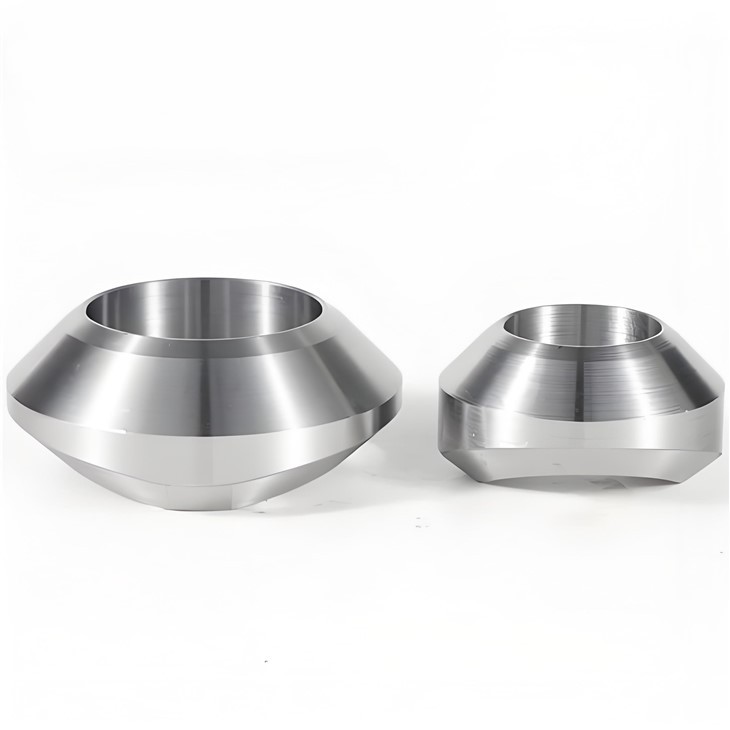
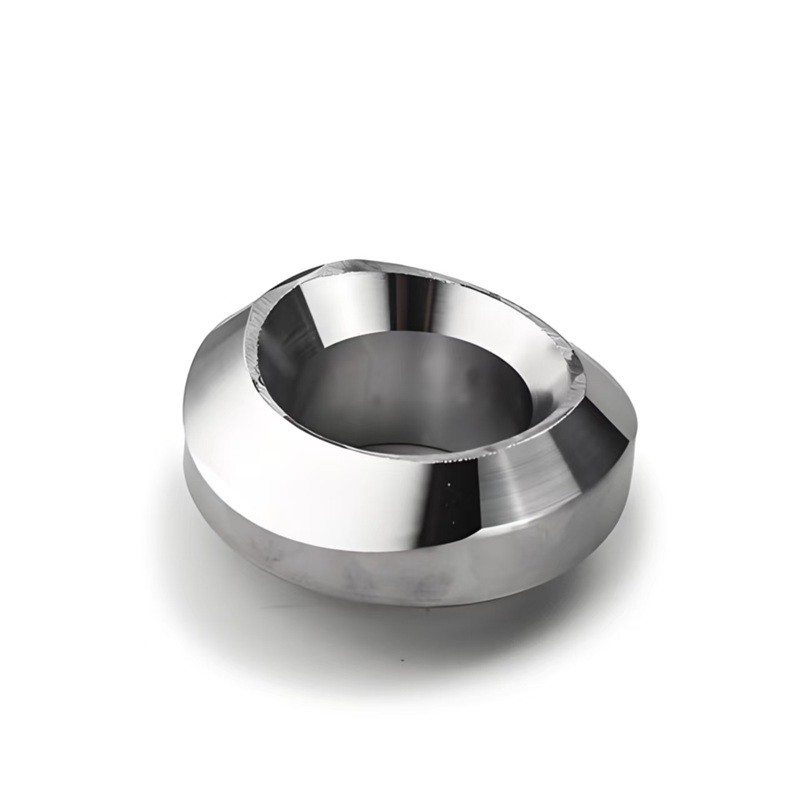
The edges of the weldolet and the main pipe are also beveled to a specific angle. The beveling helps to ensure proper penetration of the weld and creates a larger area for the weld metal to bond. The bevel angle and width are determined by the thickness of the materials and the welding process to be used.
Welding
Welding is the process of joining the weldolet to the main pipe. There are several welding methods that can be used, including shielded metal arc welding (SMAW), gas tungsten arc welding (GTAW), and gas metal arc welding (GMAW).
SMAW, also known as stick welding, is a simple and widely used welding method. It uses a consumable electrode coated with a flux that provides a shielding gas to protect the weld from atmospheric contamination. GTAW, or TIG welding, uses a non - consumable tungsten electrode and an inert gas, such as argon, to shield the weld. This method is known for its high quality and precision, making it suitable for welding thin materials and high - quality welds. GMAW, or MIG welding, uses a continuous wire electrode and a shielding gas. It is a fast and efficient welding method, suitable for high - production welding.
During the welding process, strict quality control measures are in place to ensure the integrity of the weld. This includes monitoring the welding parameters such as current, voltage, and welding speed. Non - destructive testing methods, such as ultrasonic testing, radiographic testing, and magnetic particle testing, are also used to detect any internal defects in the weld.
Finishing and Inspection
After welding, the weldolet undergoes a finishing process. This includes grinding and polishing the weld area to remove any excess weld metal and to achieve a smooth surface finish. The surface of the weldolet may also be treated with a protective coating to prevent corrosion.
Inspection is a critical step in the manufacturing process. The weldolet is inspected for dimensional accuracy, surface finish, and the presence of any defects. Dimensional inspection is carried out using precision measuring tools such as calipers, micrometers, and coordinate measuring machines (CMMs). The surface finish is evaluated using surface roughness testers. Non - destructive testing methods are repeated to ensure the quality of the weld and the overall integrity of the weldolet.
Packaging and Delivery
Once the weldolet has passed all the inspections, it is ready for packaging. The weldolet is carefully packed to protect it from damage during transportation. It is usually wrapped in protective materials such as plastic film or bubble wrap and placed in a sturdy carton or wooden crate.
The packaged weldolets are then delivered to the customers. We ensure timely and reliable delivery, and we work closely with shipping companies to track the shipment and ensure that it reaches the destination safely.
Conclusion
The manufacturing process of weldolets is a complex and multi - step process that requires precision, expertise, and strict quality control. From raw material selection to the final delivery, every step is crucial in ensuring the production of high - quality weldolets. As a weldolet supplier, we are committed to providing our customers with the best - quality products that meet their specific requirements.
If you are in the market for weldolets or have any questions about our products, please feel free to contact us for a detailed discussion and procurement negotiation. We look forward to serving you and meeting your pipe - fitting needs.
References
- ASME B16.9 - Factory - Made Wrought Buttwelding Fittings
- MSS SP97 - Integrally Reinforced Forged Branch Outlet Fittings
- Welding Handbook, American Welding Society