

What is the fatigue life of stub ends?
Oct 13, 2025
The fatigue life of stub ends is a crucial aspect that often determines their performance and suitability in various industrial applications. As a trusted stub end supplier, we understand the significance of this parameter and are committed to providing high - quality products with reliable fatigue life characteristics.
Understanding Stub Ends
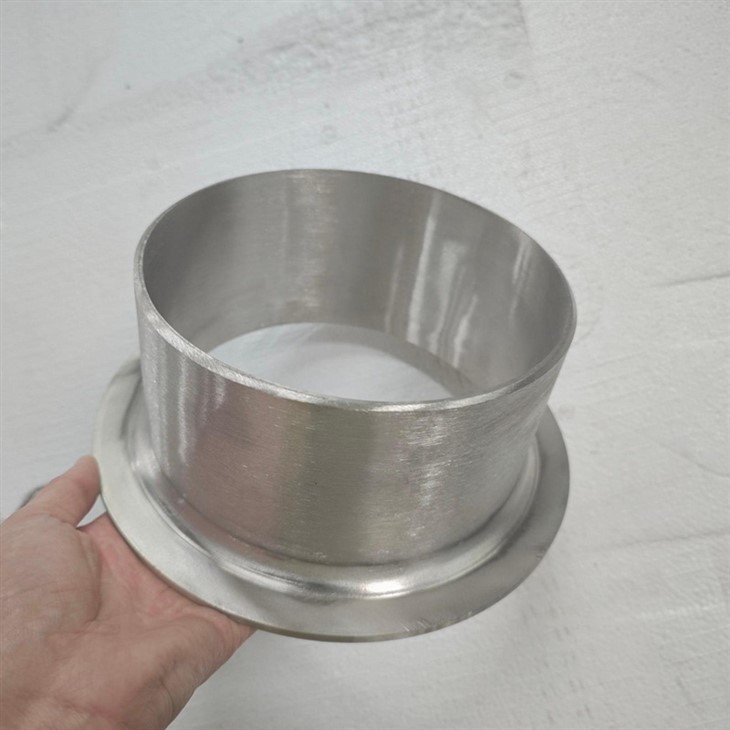
Stub ends are essential components in piping systems. They are typically used in lapped - joint connections, which are popular due to their ease of installation and disassembly. A stub end is welded to the pipe, and a lap joint flange is then slipped over it. This design allows for easy alignment and reduces the need for complex welding operations at the joint.
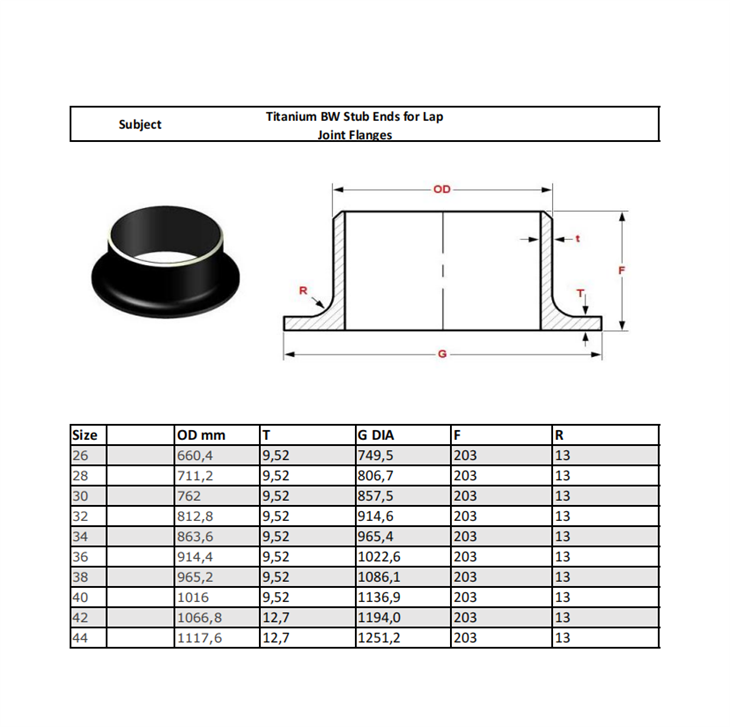
There are different types of stub ends available in the market, such as Large OD Lapped Joint Stub End and Titanium Gr7 Stub End. Each type has its own unique properties and is suitable for specific applications. For example, large OD lapped joint stub ends are used in systems where large - diameter pipes are involved, while titanium Gr7 stub ends are favored in corrosive environments due to the excellent corrosion - resistant properties of titanium grade 7.
Factors Affecting the Fatigue Life of Stub Ends
Material Properties
The material from which a stub end is made plays a fundamental role in determining its fatigue life. Different materials have different mechanical properties, such as strength, ductility, and hardness. For instance, stainless steel stub ends are known for their good corrosion resistance and relatively high strength. They can withstand cyclic loading to a certain extent without significant damage. On the other hand, carbon steel stub ends may have higher strength but are more prone to corrosion, which can reduce their fatigue life if not properly protected.
Titanium stub ends, like the Titanium Gr7 Stub End, offer a combination of high strength - to - weight ratio and excellent corrosion resistance. Titanium has a unique crystal structure that gives it good fatigue resistance, especially in harsh environments where other materials may fail prematurely.
Loading Conditions
The type and magnitude of the loads applied to a stub end are critical factors. Cyclic loading, which is common in many industrial processes, can cause fatigue damage over time. If the load amplitude is high, the stub end will experience more stress cycles, leading to a shorter fatigue life. For example, in a piping system that experiences frequent start - stop operations, the stub ends are subjected to cyclic pressure changes. These pressure fluctuations can create stress concentrations at the weld joints or other critical areas of the stub end, accelerating the fatigue process.
In addition to cyclic loading, static loads also need to be considered. Excessive static loads can cause permanent deformation or over - stressing of the stub end, which can reduce its ability to withstand subsequent cyclic loads.
Welding Quality
Since stub ends are usually welded to the pipes, the quality of the welding process has a significant impact on their fatigue life. Poor welding can introduce defects such as porosity, cracks, or incomplete fusion. These defects act as stress concentrators, which can initiate fatigue cracks under cyclic loading. A well - executed welding process, on the other hand, ensures a strong and homogeneous joint, reducing the risk of fatigue failure.
Welders need to follow strict welding procedures and quality control measures. This includes proper pre - heating, welding parameters selection, and post - weld heat treatment if necessary. The use of appropriate welding consumables that match the material of the stub end is also crucial for ensuring a high - quality weld.
Environmental Conditions
The environment in which the stub end operates can greatly affect its fatigue life. Corrosive environments, such as those containing acids, alkalis, or saltwater, can cause corrosion of the stub end material. Corrosion reduces the cross - sectional area of the stub end, increasing the stress levels under a given load. Moreover, corrosion products can also act as stress raisers, promoting the initiation and propagation of fatigue cracks.
High - temperature environments can also have a negative impact on the fatigue life of stub ends. At elevated temperatures, the material properties of the stub end may change, such as a decrease in strength and an increase in creep rate. Creep is a time - dependent deformation process that can interact with fatigue, leading to accelerated failure.
Measuring and Predicting the Fatigue Life of Stub Ends
There are several methods for measuring and predicting the fatigue life of stub ends. One common approach is through experimental testing. Fatigue tests can be conducted in a laboratory using specialized equipment. In these tests, a stub end specimen is subjected to cyclic loading under controlled conditions, and the number of cycles to failure is recorded.
Finite element analysis (FEA) is another powerful tool for predicting the fatigue life of stub ends. FEA software can simulate the stress distribution and deformation of the stub end under different loading conditions. By inputting the material properties, geometry, and loading parameters, engineers can obtain detailed stress and strain information. This information can then be used to estimate the fatigue life of the stub end based on established fatigue theories.
However, it should be noted that both experimental testing and FEA have their limitations. Experimental testing is time - consuming and expensive, and the results may not fully represent the real - world conditions. FEA results are also dependent on the accuracy of the input data and the assumptions made in the model.
Improving the Fatigue Life of Stub Ends
As a stub end supplier, we take several measures to improve the fatigue life of our products. Firstly, we carefully select high - quality materials. We source materials from reliable suppliers and conduct strict material inspections to ensure that they meet the required standards.
Secondly, we pay great attention to the welding process. Our welders are highly trained and experienced, and they follow strict welding procedures. We also use advanced welding techniques and equipment to ensure the quality of the welds.
In addition, we can provide surface treatment options for our stub ends. For example, coatings can be applied to protect the stub end from corrosion. These coatings can act as a barrier between the material and the corrosive environment, reducing the risk of corrosion - induced fatigue failure.
Importance of Fatigue Life in Industrial Applications
The fatigue life of stub ends is of utmost importance in industrial applications. In industries such as oil and gas, chemical processing, and power generation, piping systems are often subjected to harsh operating conditions. A failure of a stub end due to fatigue can lead to significant safety hazards, such as leaks of hazardous chemicals or loss of pressure in a system.
Moreover, fatigue - related failures can result in costly downtime for maintenance and repair. By using stub ends with a long fatigue life, industries can improve the reliability and efficiency of their piping systems, reducing the overall operating costs.
Contact Us for Your Stub End Needs
If you are in need of high - quality stub ends with reliable fatigue life characteristics, we are here to help. As a professional stub end supplier, we have a wide range of products to meet your specific requirements. Whether you need Large OD Lapped Joint Stub End or Titanium Gr7 Stub End, we can provide you with the best solutions. Contact us to start a procurement discussion and let us help you find the perfect stub ends for your applications.
References
- ASTM International. (20XX). Standards related to stub ends and piping components.
- ASME Boiler and Pressure Vessel Code. (20XX). Section VIII: Rules for Construction of Pressure Vessels.
- Shigley, J. E., & Mischke, C. R. (20XX). Mechanical Engineering Design. McGraw - Hill.