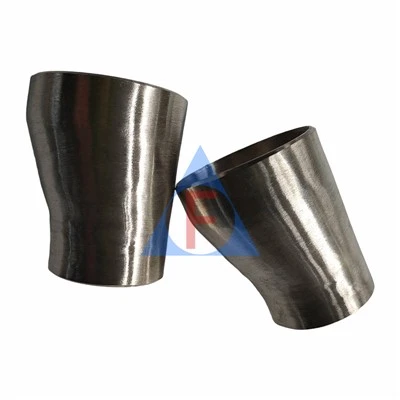
Application of titanium & titanium alloy pipe-fittings in petrochemical industry
Jun 03, 2025
As we all know, titanium & titanium alloy pipe-fittings play a key role in the petrochemical industry by virtue of their excellent corrosion resistance, high strength and lightweight characteristics. And it can resist wet chlorine gas, acidic media, sulfide and seawater corrosion,to extend equipment life and reduce maintenance costs.
The application and advantages and disadvantages of titanium and titanium alloy pipe-fittings in the petrochemical industry:
I. The application of titanium and titanium alloy pipe-fittings in the petrochemical field mainly includes: drill pipes, heat ex-changers, pumps, valves and other equipment.
Titanium alloy pipe-fittings perform exceptionally well in these applications, especially in terms of corrosion resistance, strength and lightweight. For example, the application of titanium alloy drill pipes in ultra-deep wells and extended-reach wells significantly reduces the hook load and torque, improving the safety factor and operational capacity of the drilling tools.
Furthermore, the application of titanium alloy heat ex-changers on offshore oil platforms has reduced the corrosion problems caused by biological contamination, thereby extending the service life of the equipment.
II. The advantages of titanium and titanium alloy pipe-fittings include:
1. High-strength: The specific strength of titanium alloy is 3.5 times that of stainless steel, 1.3 times that of aluminum alloy, and 1.6 times that of magnesium alloy. It can withstand greater impact and pressure, and is particularly suitable for drilling operations under complex well conditions.
2. Corrosion resistance: Titanium alloy has a naturally formed dense oxide layer on its surface, which has self-repairing properties. It exhibits excellent corrosion resistance in various media, especially in high-temperature and corrosive environments.
3. Light-weight: Titanium alloy has a low density, which can significantly reduce the weight of equipment, decrease torque and energy consumption, and improve operational efficiency and safety.
4. Long service life: In corrosive environments, the service life of titanium alloy pipe-fittings is 100 times that of conventional steel parts, significantly reducing maintenance costs and downtime.
III. The disadvantages of titanium and titanium alloy pipe-fittings include:
1. High cost: Due to the complex manufacturing process of titanium alloys, the material cost is high, resulting in a higher overall equipment price;
2. Difficult processing: The processing of titanium alloys requires special techniques and equipment, which increases the manufacturing difficulty and cost.
In general, its advantages with the long-life, high reliability and low maintenance requirements which make it an ideal choice for enhancing the economics and safety of installations, and help the petrochemical industry to develop efficiently and sustainably, in the field of oil pipelines, so the advantages of using titanium and titanium alloy pipe-fittings are even more prominent.