

What standards do stub ends follow?
Jun 25, 2025
What standards do stub ends follow?
As a seasoned stub end supplier, I've witnessed firsthand the importance of standards in the manufacturing and application of stub ends. In this blog, I'll delve into the various standards that stub ends adhere to, providing insights into their significance and how they ensure quality and compatibility in different industries.
ASTM Standards
The American Society for Testing and Materials (ASTM) has developed a comprehensive set of standards for stub ends. These standards cover a wide range of aspects, including material composition, mechanical properties, dimensions, and testing methods.
One of the most commonly referenced ASTM standards for stub ends is ASTM A105. This standard applies to forged carbon steel piping components, including stub ends. It specifies the chemical composition, mechanical properties, and heat treatment requirements for carbon steel materials used in pressure applications. ASTM A105 stub ends are widely used in the oil and gas, petrochemical, and power generation industries due to their excellent strength and durability.
Another important ASTM standard is ASTM A350. This standard covers carbon and low-alloy steel forgings for low-temperature service. ASTM A350 stub ends are designed to withstand low temperatures without losing their mechanical properties, making them suitable for applications in cold environments such as offshore oil rigs and Arctic pipelines.
In addition to these carbon steel standards, ASTM also has standards for stainless steel stub ends, such as ASTM A182. This standard covers forged or rolled alloy and stainless steel pipe flanges, forged fittings, and valves and parts for high-temperature service. ASTM A182 stub ends are commonly used in applications where corrosion resistance is required, such as in the chemical and food processing industries.
ASME Standards
The American Society of Mechanical Engineers (ASME) also plays a crucial role in setting standards for stub ends. ASME standards are widely recognized and adopted in the United States and around the world.
ASME B16.5 is one of the most well-known ASME standards for pipe flanges and flanged fittings, including stub ends. This standard specifies the dimensions, tolerances, and materials for flanges and flanged fittings in sizes NPS 1/2 through NPS 24. ASME B16.5 ensures that stub ends are compatible with other piping components, such as valves and pipes, and that they can be assembled and installed correctly.
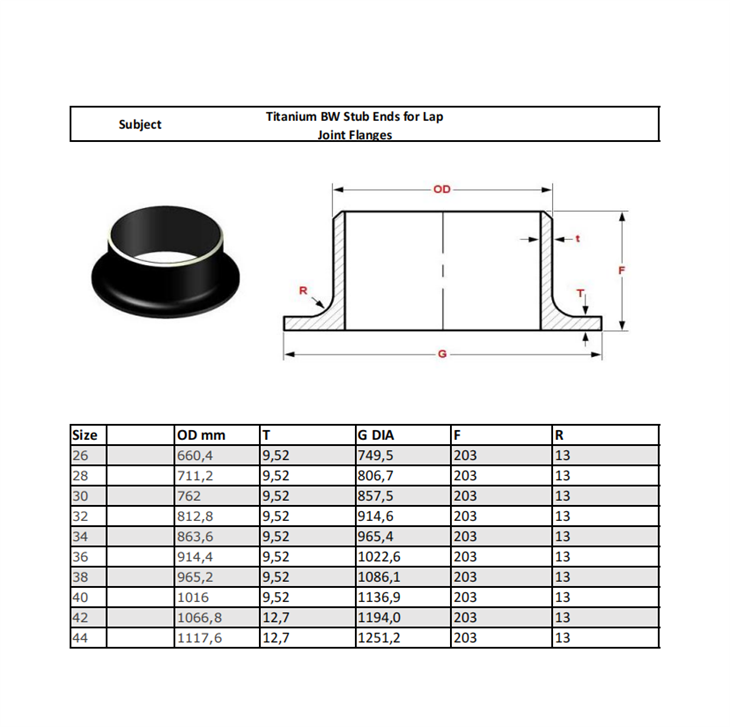
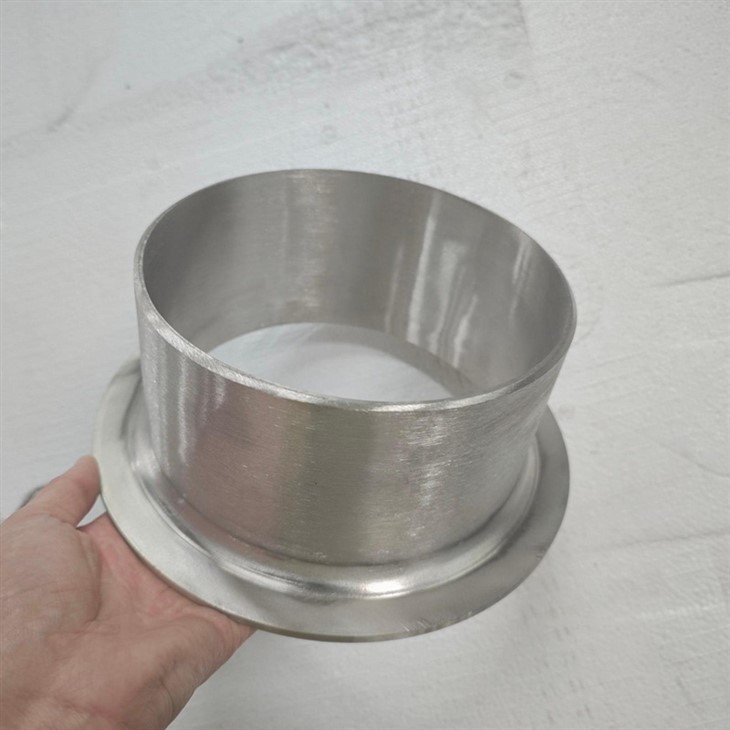
ASME B16.47 is another important standard for large-diameter flanges, including large OD lapped joint stub ends. This standard covers flanges in sizes NPS 26 through NPS 60 and provides detailed requirements for dimensions, materials, and testing. Large OD Lapped Joint Stub End manufactured to ASME B16.47 standards are commonly used in high-pressure and high-temperature applications, such as in the oil and gas and power generation industries.
API Standards
The American Petroleum Institute (API) has developed standards specifically for the oil and gas industry. These standards ensure the safety and reliability of equipment used in oil and gas exploration, production, and transportation.
API 6A is a widely recognized API standard for wellhead and Christmas tree equipment. This standard covers the design, manufacturing, testing, and inspection of wellhead and Christmas tree components, including stub ends. API 6A stub ends are designed to withstand high pressures and harsh operating conditions in oil and gas wells.
API 6D is another important API standard for pipeline valves. This standard specifies the requirements for the design, manufacturing, testing, and inspection of pipeline valves, including those with stub ends. API 6D stub ends are commonly used in oil and gas pipelines to connect valves to the pipeline system.
ISO Standards
The International Organization for Standardization (ISO) has also developed standards for stub ends that are recognized globally. ISO standards provide a common framework for the design, manufacturing, and testing of stub ends, ensuring compatibility and interchangeability between different manufacturers and users.
ISO 7005 is an ISO standard for steel flanges. This standard covers flanges in sizes DN 10 through DN 4000 and provides detailed requirements for dimensions, materials, and testing. ISO 7005 stub ends are commonly used in international projects where a globally recognized standard is required.
ISO 15156 is an ISO standard for materials for use in oil and gas production in sweet and sour environments. This standard specifies the requirements for materials used in equipment exposed to hydrogen sulfide (H2S) and other corrosive substances. Titanium Gr7 Stub End manufactured to ISO 15156 standards are suitable for use in sour gas environments, where corrosion resistance is critical.
Importance of Standards
The standards that stub ends follow are of utmost importance for several reasons. Firstly, they ensure the quality and reliability of stub ends. By adhering to strict standards, manufacturers can control the material composition, manufacturing processes, and testing procedures, resulting in stub ends that meet or exceed the required performance criteria.
Secondly, standards ensure compatibility between stub ends and other piping components. When all components in a piping system are manufactured to the same standards, they can be easily assembled and installed, reducing the risk of leaks and other issues.
Thirdly, standards provide a basis for inspection and certification. Independent third-party inspection agencies can verify that stub ends meet the relevant standards, providing assurance to end-users that the products they are purchasing are of high quality and safe to use.
Finally, standards promote international trade and cooperation. By having a common set of standards, manufacturers and users from different countries can communicate and do business more effectively, facilitating the global exchange of stub ends and other piping components.
Conclusion
In conclusion, stub ends follow a variety of standards developed by organizations such as ASTM, ASME, API, and ISO. These standards cover aspects such as material composition, mechanical properties, dimensions, and testing methods, ensuring the quality, compatibility, and safety of stub ends in different industries.
As a stub end supplier, we are committed to manufacturing our products to the highest standards. We use only high-quality materials and employ advanced manufacturing processes to ensure that our stub ends meet or exceed the requirements of our customers. Our products are also subject to rigorous testing and inspection to ensure their quality and performance.
If you are in the market for stub ends, we invite you to contact us for more information. Our experienced sales team can help you select the right stub ends for your specific application and provide you with a competitive quote. We look forward to the opportunity to work with you and meet your stub end needs.
References
- ASTM International. (n.d.). ASTM standards for piping components. Retrieved from ASTM website
- ASME International. (n.d.). ASME standards for pipe flanges and fittings. Retrieved from ASME website
- American Petroleum Institute. (n.d.). API standards for oil and gas equipment. Retrieved from API website
- International Organization for Standardization. (n.d.). ISO standards for steel flanges and piping components. Retrieved from ISO website